Aum

Matrimonial Blog

March 9th, 2012
Kayastha Matrimonial

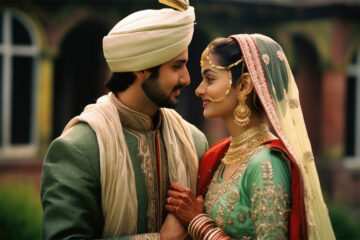
Indian weddings have been made popular around the world because of cinema and bollywood which appropriately portray them with all the grandeur and festivities. Besides that, with all the different casts and creeds that reside within the country, there are a number of different methods and ceremonies that are followed by people from different backgrounds.

Who are the Kayasthas?

Kayasthas are considered to be a sub-sect of the Brahmin cast and are commonly found in the northern parts of India. They are referred to the writing caste and worship Lord Chitragupta, whose temples incidentally are found in down south especially in Kanchipuram.

This cast mainly follows the same system of marriage irrespective of where they reside, with a small influence of the local traditions and rituals. Like other Brahmin sub-castes, they too prefer to marry within their own sect.

What to Expect in a Kayastha Matrimonial Ceremony

A Kayastha wedding ceremony is typically consists of the following events.

1. The Bariksha is a ceremony that represents that the girl and the boy accept each other’s proposal of marriage. This ritual is completed with the girls family presents the boy with a silver bowl of rice, supari, turmeric powder and money as blessings.

2. The Sagai, which is the engagement ceremony, involves the exchange of the engagement rings between the bride and the groom to be. Here, it is the family of the groom visits the home of the girl with gifts, dresses and jewellery for the bride.

3. The Haldi ceremony takes place in both houses for the girl and the boy. This event signifies the purification of the soul and a blissful beginning of a new life.

4. The Tilak ceremony is a lot like the Sagai but it is the bride’s family presenting all the gifts to the groom.

5. The Mehendi is an event celebrated much closer to the day to the wedding, where henna is applied in beautiful design forms on the bride, close family, relatives and friends. What is unique about a Kayastha matrimonial is that henna is applied on the hands of the groom also.

These events are followed by the primary events of the wedding, bidai and reception which is a modern take on presenting the newly wedded couple to family, friends and loved ones.

Brahmin Matrimonial

As per the cast system that has been followed in India for over a thousand years, Brahmins are considered to be on the top of the hierarchy, followed by Kshatriyas, Vaishyas and Shudras. Even though this system is not necessarily followed as strictly in today’s day and age, many people are still particular about making sure that they at least marry into the same caste as far as possible.

Indian Weddings

On the other hand, it is a known fact that Indian marriages are like festivals; celebrated with great pomp and joy. A marriage is considered to be among the most important celebrations in a family and tend to get pretty extravagant with all the colours, music, dance, food and events which span over multiple days.

Brahmin Matrimonial ceremonies follow their own set of rituals and traditions while keeping up with the Indian enthusiasm of celebrations.

Rituals and Customs in a Brahmin Matrimonial

A quintessential Brahmin wedding ceremony is characteristic of very elaborate customs that consist of ceremonies such as the Engagement, Jaimala, Pheras, Kanyadaan and Bidai. India being a very vast, diverse and secular country means that even within a particular cast, there are derivations as to how certain traditions and rituals are followed in different parts.

For example, there is a vast difference in the wedding ceremonies conducted in South India and North India in spite of many people belonging to the same cast.

Finding the Right Partner

Like other communities, Brahmin Matrimonial community is very possessive and conscious about the caste in which their sons and daughters marry into. Back in the days, it was the heads of the family or community that decided what would make a suitable matrimonial union. This was done by taking into consideration a number of factors such as familial background, ethnicity, caste, status, education etc.

Today, with the cultures opening up a little more, brides and grooms have the freedom to find their own life partners. The use of technology and the internet facilitates the possibility of finding Brahmin brides and grooms from all parts of the world.

Indian weddings are known for its pomp, glamour and ceremonies that are rich in culture and traditions. Like most Indian communities, Punjabi Matrimonial ceremonies also follow a range of traditions and customs which enhance the beauty of the ceremonies and signify the purity of the matrimonial bond.

Punjabi Matrimonial

The Glamour of Punjabi Weddings

In all parts of India, especially in the north, weddings are celebrated like any other festival with the same enthusiasm and excitement. Friends, family, relatives from all parts of the country and now even the world come together to bless the newlyweds.

Their weddings are typically very flamboyant and span over a couple of days. All the family members and guests attend all these ceremonies which consist of lots of colors, music, pomp and magic.

The Ceremonies

1.       A typical Punjabi wedding starts with a modest ceremony known as the ‘Roka’ or ‘Thaka’ where the father of the bride and the bride’s relatives visit the boy’s home with gifts, sweets and blessings.

2.       This is followed by the ‘Mangini’ which is much like a quintessential engagement ceremony. This takes place in front of the elders of the household where rings are exchanged between the bride and the groom.

3.       On the day of the wedding, the ‘Baraat’ is a procession that is taken out by the groom and his family members who travel to the venue of the wedding ceremony. This procession consists of a lot of fun, frolic, music and dance and marks the arrival of the groom to fetch his bride.

4.       On arrival, there is a small ceremony known as the ‘Milni’ which signifies the meeting of the relatives and family members of both sides. Gifts are exchanged and this signifies the start of the wedding ceremonies where the families are now united.

5.       The bride and groom now exchange garlands in a ceremony known as the ‘Jaimala’ and proceed to the ‘Phera’s’ where the vows are taken between the couple.

At the end of this ceremony takes place the Bidai where the family members of the bride bid adieu to their little girl who is moving in with her husband and his family. Each and every ceremony in a Punjabi matrimonial is conducted based on auspicious hours set by the family priests. All in all, Punjabi weddings are an experience to remember.

Almost every Indian girl or boy who is of marriageable age and is looking for a potential life partner today, chooses to register with an Indian Matrimonial Website. One can decide to register on different websites depending on their requirement and their expectations of out a life partner. There are also many generic websites which cater to a larger audience or group of Indian brides and grooms, thus letting you browse through thousands of profiles to find that one person with whom you would want to spend the rest of your life with.

As a registrant, you will avail access to a wide range of database that consists of other potential brides and grooms as well as the ability to send out automated messages to profiles that you find interesting. If you wish to avail services beyond this, you are required to opt for the paid or premium service that further gives to access to a range of features that makes your initiative to find a partner for life much easier.

Indian Matrimonial Website

What Will I Get as a Paid Registrant?

If you decide to opt for the premium services of any Indian matrimonial website, this is the list of benefits that you are likely to receive –

1. Personalized Messaging – With paid services come the ability to send and receive personalized messages to and from other registrants. This will help you informally interact with other profiles more before you decide to take the next step.

2. Instant Messaging – You can also make use of the instant messaging and chat features that facilitate further communication and open doors to getting to know other single brides or grooms.

3. Protected Profiles – Some Indian matrimonial websites also allow you to share limited information with other registrants and increase access as and when you are comfortable with the people who see your profile. You can protect your photos etc., to make sure it is not being misused by fraudulent profiles.

4. Horoscope Matching – You can avail services such as Kundli Matching which allow you to understand before-hand if your horoscopes are matching and if your union will be compatible or not.

5. Expanded Views – As a paid member you will also be able to gain access to additional information of the profiles you are browsing thus making it easier for you to conduct a background check on the profiles before you choose to contact them or initiate a conversation.

Additionally, some Indian Matrimonial Website also choose to offer supplementary services such as wedding planning which makes the entire gamut of getting married so much simpler and less stressful. Opting for a premium membership on any website can benefit you in more ways than you can imagine. In addition to giving you access to other potential brides and grooms who belong to a range of ethnicities and professional backgrounds, you can also make use of these additional features to help make the correct decision for your future.

In spite of all the progress that the Indian society is making at large, it is highly saddening to realize that this birth place of Vedic astrology has reached a point of ignorance and blind faith which results in the generation of a large number of myths and misconceptions about the Manglik dosha.

Manglik Dosha

One of the biggest misconceptions about this condition are that marrying someone with this astrological condition leads to the death of either one of the spouses. It is about time that the Indian society chooses to educate itself and break all barriers of superstition and understand what the real implications of planetary movements and positions are with respect to matters of marriage.

The fear of the death of a spouse is largely redundant especially because people tend to generalize the consequence with the presence of the mangal dosh in a horoscope. It is important to understand that the severity of the dosh is highly dependent on the presence of the planet Mars in different houses.

Another common misconception of a ‘double manglik’ is evidently non-existent since there is no such thing. As a matter of fact, if a person with the manglik dosha marries someone with the same condition then it is believed that the ill effects of this astrological condition nullifies itself.

This particular dosha is among the most talked about and feared astrological situations in the Hindu society. And its gravity is multiplied ten-fold because it is believed to have a direct impact on the marriage of a native. There are innumerable numbers of great wedding matches that tend to get rejected everyday because of the presence of this condition in the astrological chart.

There is a lot of confusion and difference in opinion when it comes to the definition of this condition. Different ancient texts, also known as Shastras, will differ in opining over which houses it must be present in to be called a mangal dosh. Additionally, different priests and astrologers will recommend different remedies for the same condition. While some priests suggest that when Mars is placed in the 1st 2nd, 4th, 7th, 8th and 12th house other believe that it’s existing in the 1st or 2nd house does not define the existence of this dosh.

There have been tremendous arguments over this, since there are different schools of thought that belong to ancient priests and Vedic astrologers such as Parashara and Varahamihira. One cannot ignore the likelihood of these texts and ideologies evolving and being exploited over a period of thousand years where beliefs and definition may have easily been modified to suit the prevailing society. Yet, by large most astrologers universally believe that the 2nd house also defines the dosha and accept all 6 houses.

On the other hand, there are 12 houses in a horoscope and if Mars is present in 6 of them, statistically it means that half the population of the world is born under this condition. This means that there is nothing to fear of this manglik condition and you are bound to find for yourself a suitable life partner with whom you will spend the rest of your life with happily.

Register FREE
  
Male
Female
Privacy Assured
Profile Security
Assured
Quick Search
Male
Female
Age: From  to yrs
With Photo